

- Laboratory
- Laboratory medicine
- Tetanus rapid test
- SCREEN ITALIA


- Company
- Products
- Catalogs
- News & Trends
- Exhibitions
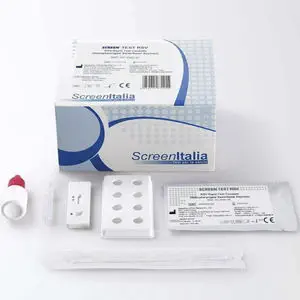
Rapid tetanus test SC-0746-40for quality controlfor antibodiesserum

Add to favorites
Compare this product
Characteristics
- Applications
- tetanus
- Application field
- for quality control
- Tested parameter
- for antibodies
- Sample type
- serum, plasma, whole blood
- Analysis mode
- immunoassay
- Format
- cassette
Description
Rapid immunoassay for the qualitative detection of tetanus toxin antibodies in whole blood, serum or plasma to aid in the diagnosis of tetanus toxin infection. The test is designed to assist in the tetanus prophylaxis of patients at risk. Since this disease does not confer immunity, the only prevention is vaccination. Immunoprotection is given by measuring the concentration of tetanus antibodies. As part of emergency medicine, knowing in real time the immune status of subjects at risk (deep wounds) allows for better management of appropriate tetanus prophylaxis. Clostridium tetani is a bacterium that causes tetanus in humans. Clostridium tetani are gram-positive spore-forming rods that are anaerobic. If they enter the body through a wound, they can multiply and produce a toxin that affects the nerves and controls muscle activity. Clostridium tetani toxin binds to peripheral nerve cell membranes and inhibits the release of neurotransmitters. Antibodies against tetanus toxin are produced in humans by the injection of chemically inactive tetanus toxin (tetanus toxoid). Vaccination is the best way to prevent C. Tetani infections in children and adults. In addition, the injection of a specific purified IgG anti-tetanus toxin is used to slow down the action of the toxin during acute infection. Sometimes it is better to know the level of tetanus toxin antibodies in the patient, to assess his immune status, to determine the need for a complementary vaccination that would ensure immunity to the tetanus toxin. In emergency situations, it is important for clinical staff to know the immune status in order to decide on the most suitable tetanus prophylaxis for high-risk
Catalogs

SCREEN CATALOGUES EN
182 Pages
Other SCREEN ITALIA products
Infectious Diseases




Related Searches
- Assay kit
- Blood assay kit
- Immunoassay assay kit
- Rapid lateral flow test
- Blood rapid diagnostic test
- Immunoassay rapid diagnostic test
- Cassette rapid diagnostic test
- Serum rapid diagnostic test
- Virus rapid diagnostic test
- Plasma rapid diagnostic test
- Respiratory infection test kit
- Whole blood rapid diagnostic test
- Infectious disease rapid diagnostic test
- Lateral flow test kit
- Cassette assay kit
- Urine rapid screening test
- Rapid respiratory infection test
- COVID-19 detection kit
- Test strip
- Antigen assay kit
*Prices are pre-tax. They exclude delivery charges and customs duties and do not include additional charges for installation or activation options. Prices are indicative only and may vary by country, with changes to the cost of raw materials and exchange rates.